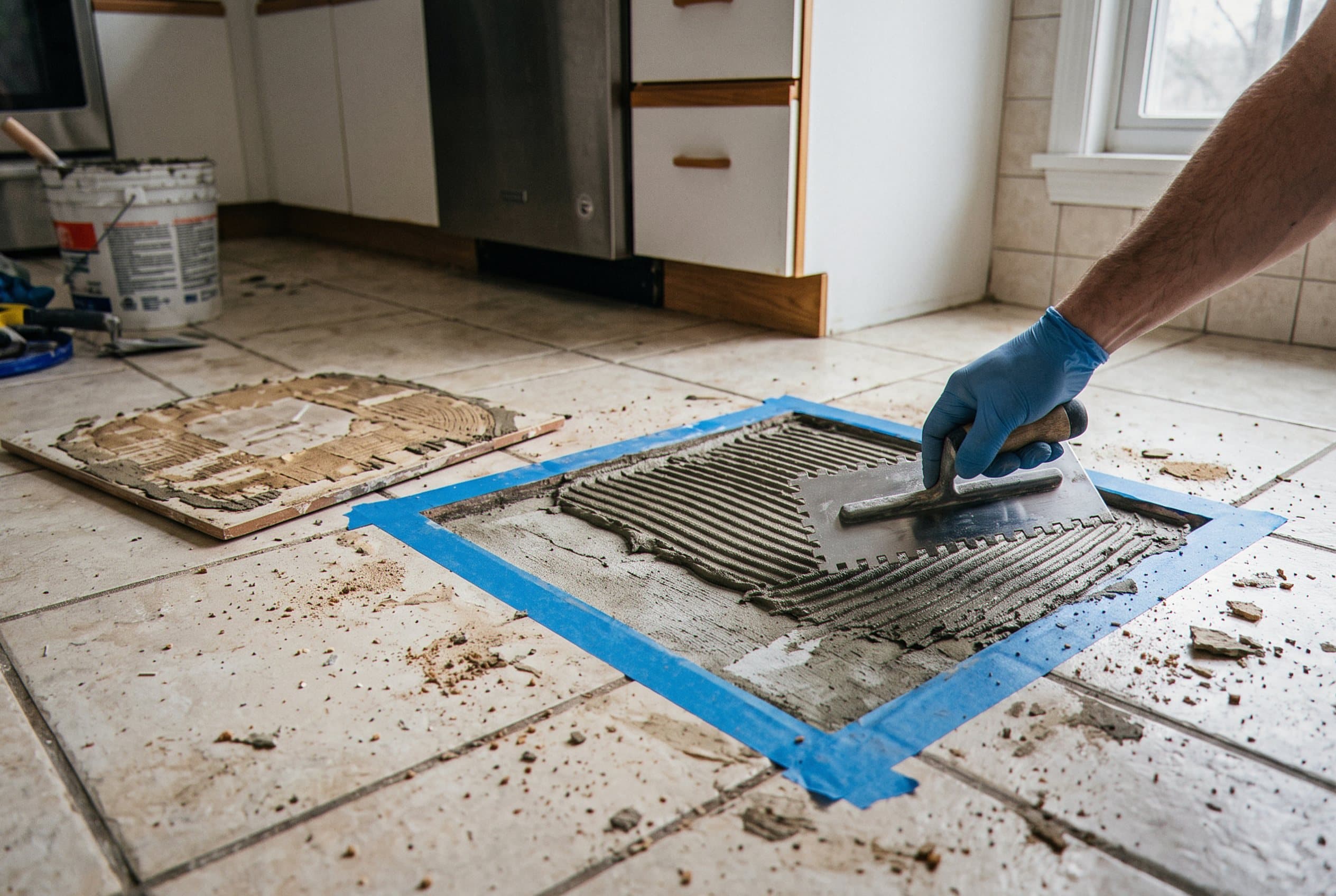
We Pull the Old Tile and Set the New Tile Right
Pulling out old tile is the part most owners underestimate. A bathroom floor laid in the 1950s often sits in a thick bed of mortar over wire lath, and that bed does not lift with a pry bar and good intentions. So we scope the removal before anything gets swung. We check what the tile is stuck to, how deep the setting bed runs, and whether the deck below is plywood, concrete slab, or old plank subfloor. We tap across the whole field and listen. A floor that sounds hollow underfoot has already begun to let go, and the pattern of those hollow spots tells us where the failure started. Wall tile gets the same read. In a shower we look hard at the corners, the curb, and the first course above the pan, because those are the places water finds first. Then we seal the room. Plastic goes up at the doorway, the vents get taped off, and we cover the path from your front door to the work area with board and paper. Demolition throws dust that will otherwise settle in rooms two floors away, and it gets into closets, drawers, and the furnace return if nobody stops it. Containing that dust is a choice, and we make it on every job. We pull the toilet, the vanity, and the base trim ourselves, so none of that lands on you the night before we start. Chipping tile off a mortar bed is loud and slow, so we tell you up front how many days that room will be noisy and out of use. Debris leaves with our crew in covered buckets and hauled loads. It does not sit in your driveway or pile up by the garage waiting on a dumpster you have to schedule yourself. Bathrooms in older Joliet homes hold a surprising amount of weight in that mortar bed alone, and we plan the haul around it rather than guessing. Once the tile is off, the leftover ridges of thinset get ground down instead of buried under extra mortar later. At the end of each work day we sweep, vacuum with a filtered unit, and wipe the path down. Your kitchen still works, and so does the other bathroom. The room we are standing in looks like a job site, because it is one, and the rest of the house still looks like your house.
What sits under the old tile decides the rest of the plan. Sometimes the deck is sound and we move straight to new backer board, fresh mortar, and layout. Other days we open a shower floor and find soft plywood at the curb, a slab with a crack in it, or wall tile that somebody set right onto drywall in a wet area. That last one shows up more than it should. It explains why the grout kept failing no matter how many times it got patched. We show you what we found before any of it gets covered again, with photos sent to your phone if you are at work. Repairs come first, every time. New tile over a bad deck fails the same way the old tile did, only sooner, because the new material is heavier and less willing to move. On a wood floor that means cutting out the rot, adding blocking between the joists, and screwing the sheathing back down. Then we get the whole plane flat before a single sheet of backer goes in. Old backer board rarely comes off clean, so we plan on new sheets instead of trying to save the ones already there. Flat matters more than most people expect. It matters more now than it did forty years ago. Tile has gotten larger, and a big tile shows every dip in a floor that a small one used to hide. On a slab we look for cracks, cold joints, and old cutback glue that has to come off before anything new will stick. Plenty of Joliet basements and first floors sit right on concrete, and concrete moves with the seasons here. Winter pulls it one way and July pulls it back. So we usually add an uncoupling layer. That way the movement stops at the membrane instead of traveling up into your grout lines and splitting them open again. In showers and other wet walls we build the waterproofing into the assembly. We do not ask grout and caulk to hold water back on their own. Grout is not waterproof, and it never was. The pan, the curb, and the inside corners get the attention, and we check the slope with water before tile ever touches it.
- Full demolition of tile, thinset, old mortar beds, and failed backer board. Every bucket of debris leaves with our crew. Nothing sits in your driveway, and nothing waits on a dumpster you have to rent and schedule yourself.
- Dust barriers at every doorway, taped vents, and covered walk paths before the first tile comes loose. We sweep and vacuum at the end of each work day, so the rest of your home stays livable while that one room is torn open.
- Deck repair before any new tile goes down. That covers soft plywood, rotted blocking, loose screws, uneven joists, cracked concrete, and old glue that has to be ground off the slab before fresh mortar will stick.
- Waterproofing built into showers and wet walls, with the pan sloped to drain and the curb shaped to shed water. We water test the pan where it makes sense. The assembly proves itself before the finish tile hides all of it.
- New tile set flat and true. We plan the layout so full pieces land where the eye goes and cuts land where they read clean. Grout joints run straight, and the doorway transitions sit level with your other floors.
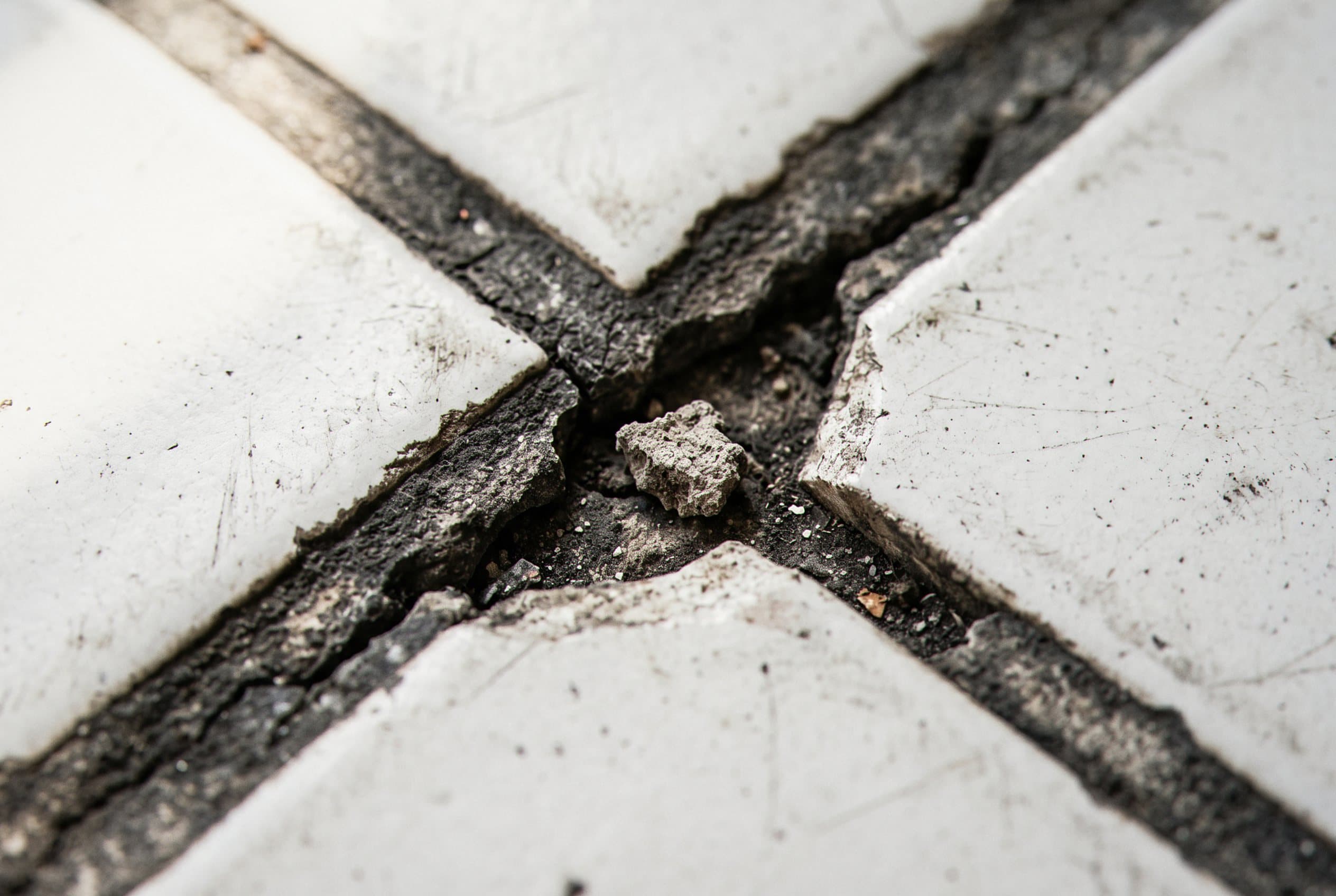
Most removal calls we take around Joliet fall into a handful of groups. Older homes near the downtown core and in the Cathedral Area still carry thick mortar floors and colored wall tile from the middle of the last century. Pink, mint, and maroon show up constantly. That tile is often sound behind the surface even when it looks tired. So we take it off slowly, since the walls behind it are usually plaster, and plaster does not forgive a rough day. Newer streets out toward Plainfield, Shorewood, and New Lenox tend to have builder grade ceramic from the 1990s and 2000s. Most of it has started to crack along the grout. Entry floors and mudrooms take the worst of it. Boots, road salt, and the freeze and thaw swing we get every winter in Will County work on a floor from both sides at once. Once a few joints open up, water gets under the tile and the bond lets go in patches. Basement baths and laundry rooms in Crest Hill, Lockport, and Rockdale sit right on the slab. Moisture moves up through that concrete in a way it never does on an upper floor, so the new build has to allow for it. Rental duplexes and flats around the west side bring a different clock, because the unit has to be back in service fast, and we schedule those in tight blocks. Kitchens are their own case. The cabinets, the appliances, and sometimes the island all have to be worked around or pulled and reset. Then there is the half job, where a past crew tiled over tile to save a day and left you a floor sitting an inch proud of the hallway. That one hides a lot until the demolition starts. In homes built before 1978 we follow EPA guidance for dust and debris, since older paint can hide behind base trim and under a tile cove. Each of those rooms wants its own plan. We walk the space with you first and tell you what we expect to find once the old tile is off. We also tell you what we will do if the deck turns out worse than it looks from up here.
If your tile is cracked, loose, hollow underfoot, or just dated enough that you wince when guests use the bathroom, we can walk the room with you and put a real scope on it. Call and tell us which room it is, what is down now, and what you want in its place. We will tell you what the removal actually involves. We will tell you what we expect to find underneath, how many days the space will be out of use, and what has to happen before new tile can go down. If the old tile can stay and only a section needs repair, we will say so. Tearing out a whole floor that does not need tearing out is not a job we want. We work across Joliet and the Will County towns around it, and we answer our own phone. You will talk to the people who will be standing in your bathroom, not to a call center reading off a script. Give us the room and the rough timing you have in mind. We will give you a straight plan and a start date you can build the rest of your week around.