
Surrounds and hearths set by hand, by our own Joliet crew
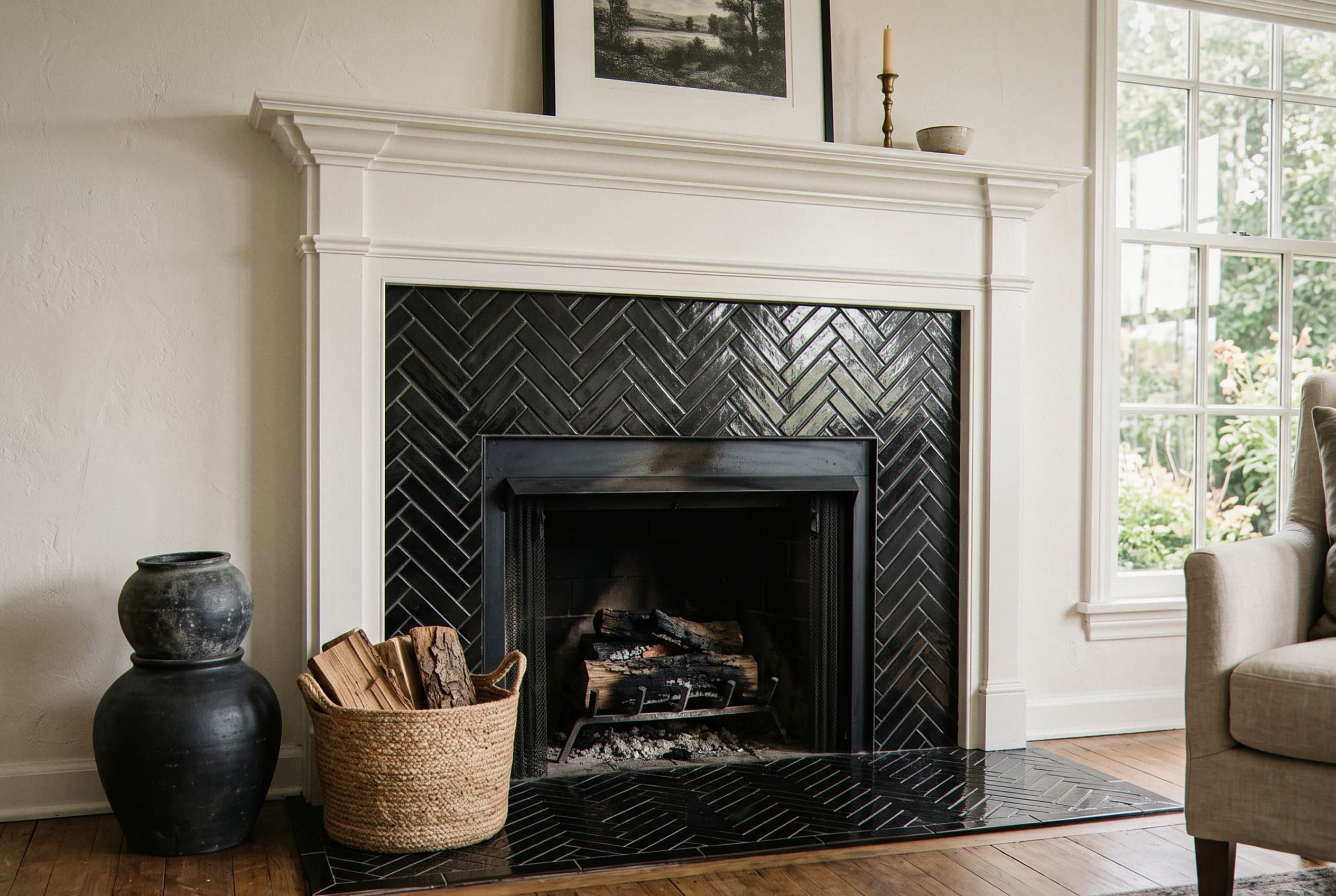
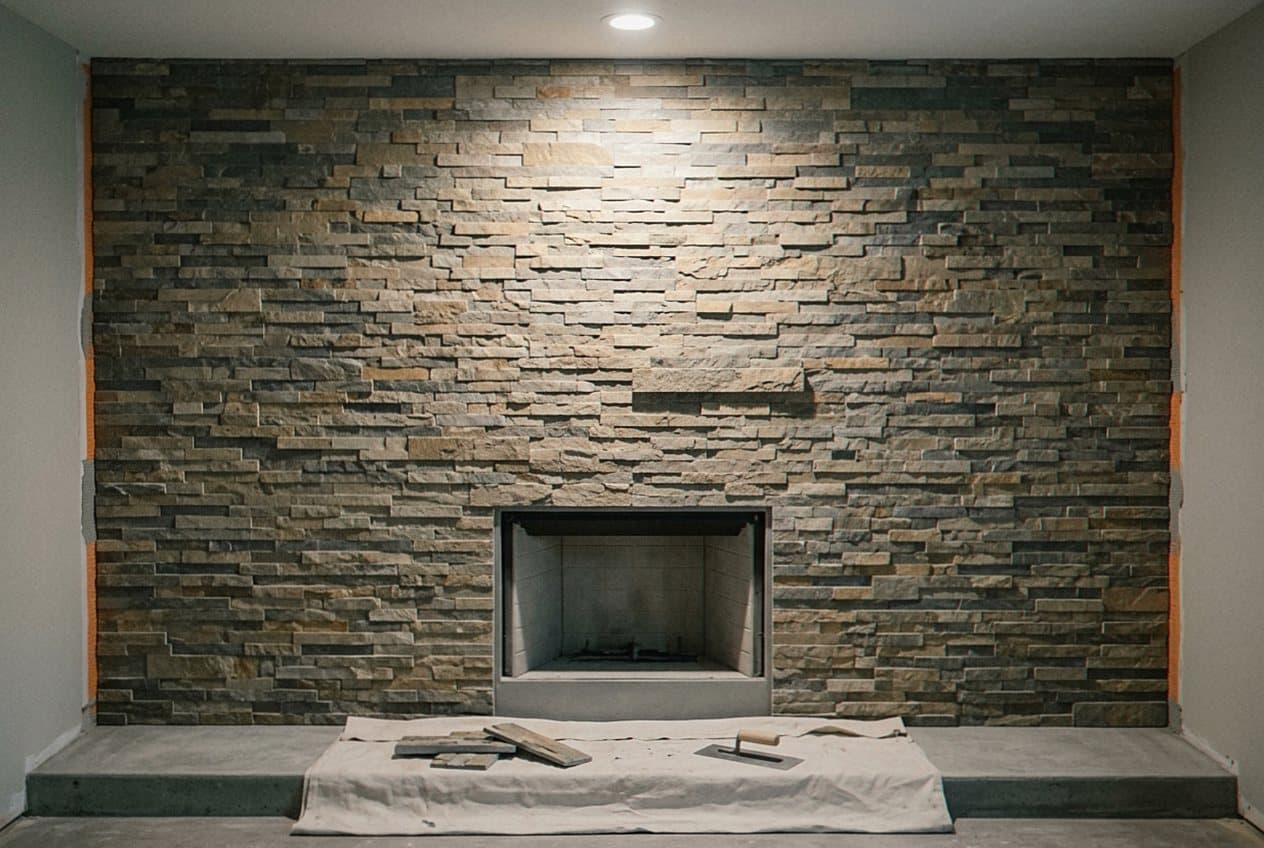
The fireplace is the wall every person in the room looks at, so the tile around it has to sit straight. We install surrounds and hearths across Joliet, and the houses here keep the work interesting. Downtown, near the Cathedral Area, we open plaster walls and old masonry that four owners have patched before us. Out toward Shorewood, Plainfield, and New Lenox we find newer builds with a thin slab of builder tile stuck over drywall and a hearth that never sat flat. Both jobs start the same way. We measure the firebox opening, the wall above it, and the hearth in front of it. Those three planes have to agree before one piece of tile goes up. Then we pull the old finish off and look hard at what is behind it. Loose mortar shows up a lot in older Joliet houses. So does a bowed wall, a hearth that got patched once and never leveled, and framing that somebody cut short around the metal box. We repair all of it first. Tile copies whatever it lands on. A wall that leans a quarter inch hands you grout lines that wander, and no amount of care with the trowel will hide that later. Once the surface is flat and solid, we lay the whole pattern out dry on the floor. That step tells us where the full tiles land and where the cuts have to go. Full pieces belong at eye level and along the edge of the opening. Cuts belong at the outside corners and up near the mantel, where nobody studies them. We shift the layout around until the top row does not end in a sliver. Stone, porcelain, ceramic, glass mosaic, and thin brick each set differently, and we handle every one of them the way it wants to be handled. Each piece goes up by hand and gets checked against the piece next to it. Spacers help. Spacers do not think, though, and a handmade tile with a wavy edge fools them every time.
Heat is what makes a fireplace different from a kitchen backsplash. Tile near a working firebox needs the right board behind it, the right mortar under it, and honest clearance around the opening. We hold the clearances the manual for your unit calls out, and we do not crowd the metal just to make a pattern come out even. When the layout and the clearance fight each other, the clearance wins and the layout changes. Behind the tile we set cement board or another substrate rated for the spot, fastened into framing, taped and skimmed solid. Gas and electric inserts get a flat, square frame built around them, so the tile meets the metal cleanly with no gap for soot to sit in. Wood burning boxes need more room, and they need a closer look at the hearth in front of the opening. That hearth has to reach far enough out from the firebox to catch an ember, and we check the depth before we set the first course rather than after. A wood mantel changes the math too. It has to sit high enough above the opening for the unit under it, so we set the mantel height first and build the tile up to it. A surround that climbs from the floor to the ceiling carries real weight, and stone or thick brick carries a lot of it. We anchor that into studs and blocking, never into drywall alone, and we prop the bottom course while the mortar grabs so the whole wall does not creep down an eighth of an inch overnight. Raised hearths get the same care underneath. A hearth takes foot traffic, dropped logs, wet boots in January, and the odd dropped tool, so the base under it has to be solid before any tile lands on it. Porous stone gets sealed when the material asks for it. Limestone and travertine drink up soot and ash, and a fireplace that gets real use through a Joliet winter will show that inside one season. Grout goes in last. We match the joint width to the tile and tool the lines flush with the face, so they shed dust instead of catching it. Then we pull the haze the same day, while it still wipes off easy.
- We tile the surround and the hearth as one job. The pattern runs from the top of the wall down to the floor with no seam where one day of work stopped and the next one picked up. That matters most on stone and thin brick, where a change in the mortar batch or a fresh box of tile can shift the color slightly. One crew, one continuous run, one set of grout lines that line up.
- We hold the clearance the manual calls out for the exact insert sitting in your house. Gas, electric, and wood burning units each want a different amount of room around the opening and above the mantel. We read the label on your unit instead of guessing from the last job. If the tile layout and the clearance disagree, we redraw the layout and tell you why before we cut a single piece.
- We rebuild the wall behind the tile before any tile touches it. Loose mortar comes out, bowed framing gets shimmed or furred flat, and the substrate goes on rated for the heat and fastened into solid wood. Nobody sees that work when the job is done. It is the reason our fireplace walls stay flat, the grout lines hold their spacing, and the outside corners still look sharp after a few Illinois winters.
- Stone, porcelain, ceramic, glass mosaic, and thin brick all get cut wet on our own saw, in your driveway or garage, not snapped over a scoring rail. Then we finish the exposed edges properly. That means a mitered corner, a metal profile, or a bullnose piece, chosen to suit the tile and the look you are after. Raw cut edges around a fireplace opening are the first thing an eye catches, and we do not leave them.
- We treat the room like people still live in it. Floors and furniture get covered before demo starts, the old surround leaves in bags instead of on your carpet, and the grout haze comes off the same day it goes on. We sweep and wipe down at the end of every shift, not just the last one. When we pull out, you get the living room back and the fireplace is the only thing that changed.
Most fireplace surrounds in Joliet take two to four days on site. A straight hearth swap can finish faster. A stone wall that runs up to a vaulted ceiling takes longer. So does any job where the demo turns up a wall we have to rebuild before the new tile goes on. We walk the schedule with you before we start. You will know which days the room is out of service and when the mantel goes back up. Taking out the old surround is part of the job, not a separate talk about money. We cover the floor and the furniture, cut the old face off in pieces instead of prying at it, bag the mess, and carry it out. The choices you make on tile size, grout color, and joint width shape the finished wall more than most people expect. A dark grout under a pale stone draws every line and turns the pattern into the main event. A grout matched to the tile lets the field read as one quiet surface. That is usually what people want when the room has a lot going on already. We bring samples and hold them up in your room, in your light, because a tile that looked great in a showroom can go flat next to your floor and your trim. Winter is our busy stretch here. Nobody wants a work zone around the firebox in December. If you want the fireplace done before the first cold snap in Will County, late summer and early fall are the easy months to get on the calendar. We work all over Joliet and the towns around it, including Shorewood, Crest Hill, Lockport, Romeoville, Plainfield, and New Lenox. When you call, you get the people who will stand in your living room with a level, not a call center reading a script.
Thinking about a new fireplace surround before the cold settles in over Joliet? Call us. Tell us what you have in mind, and we will come out to measure the opening and the hearth and look at the wall behind the old face. Then we walk through tile and grout options with you and put the job on the calendar.